
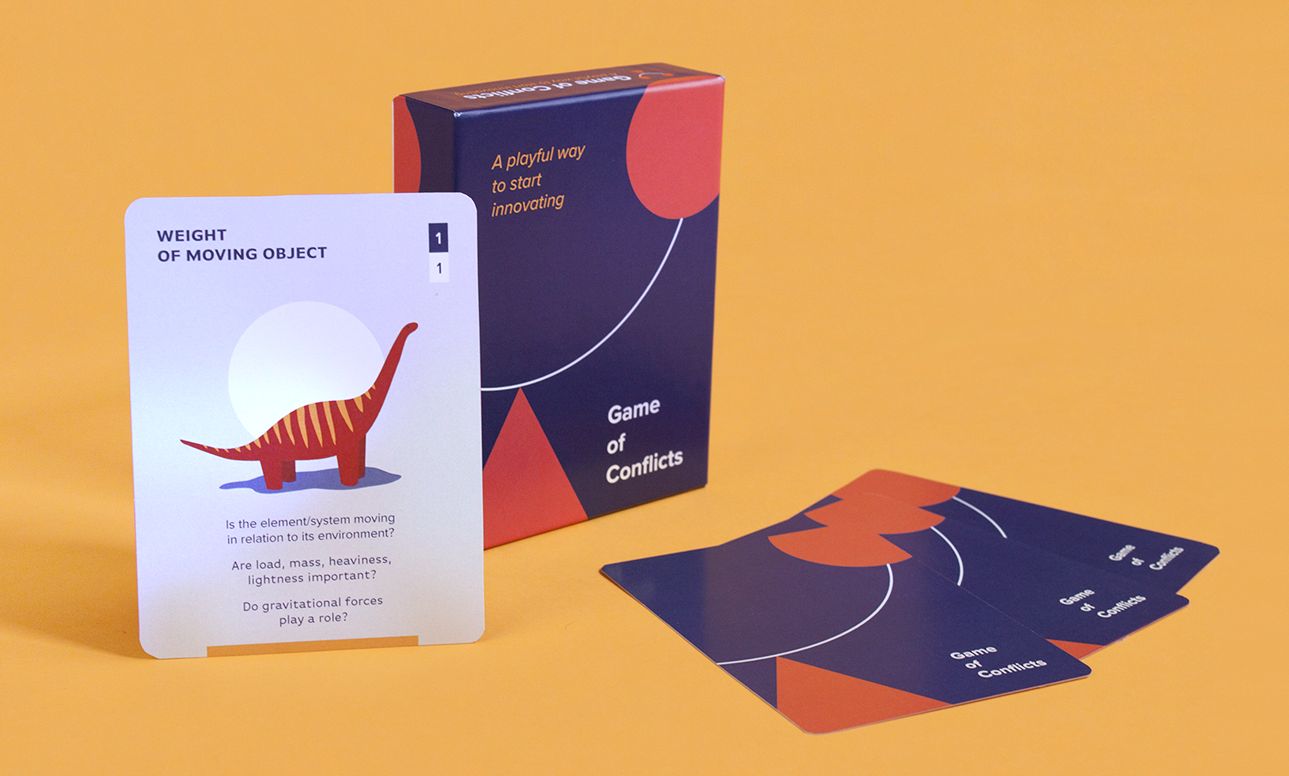
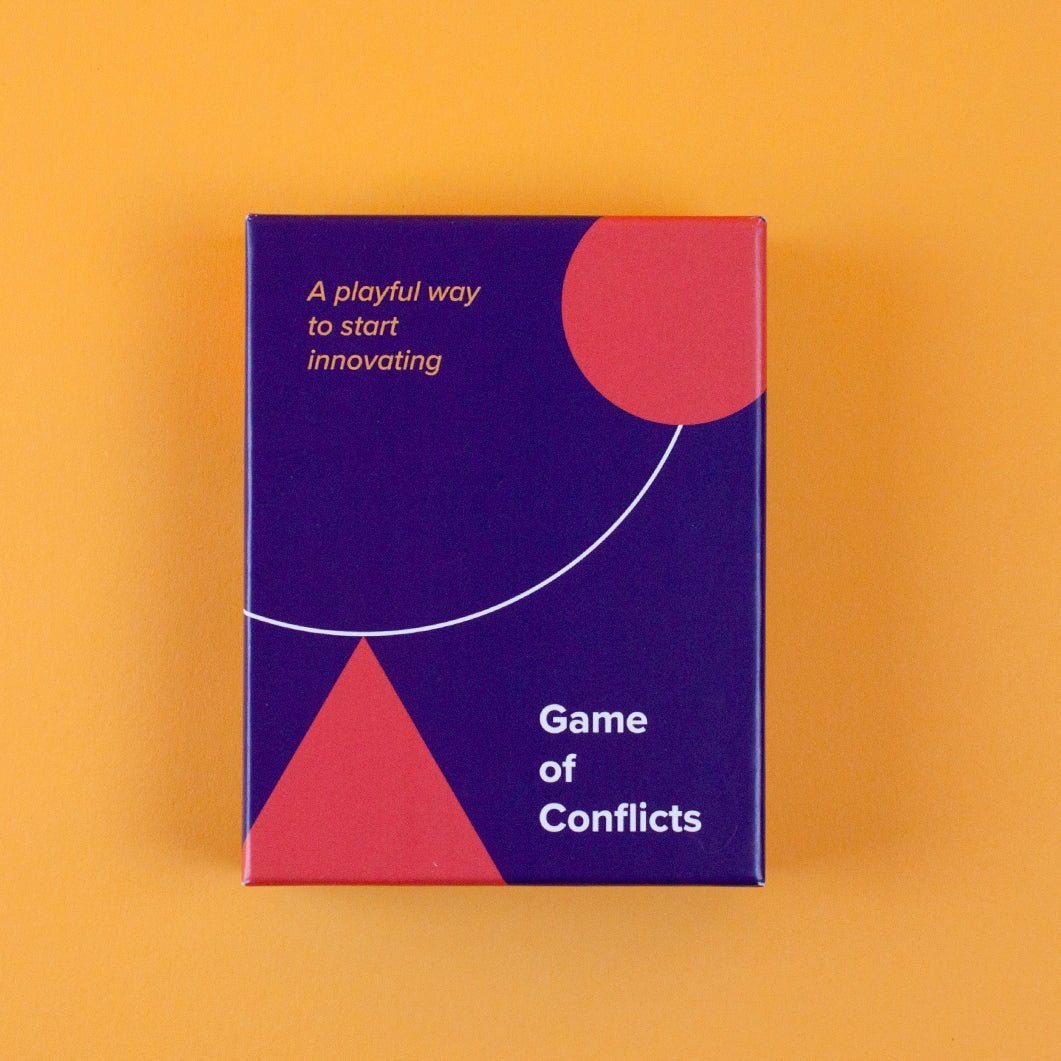
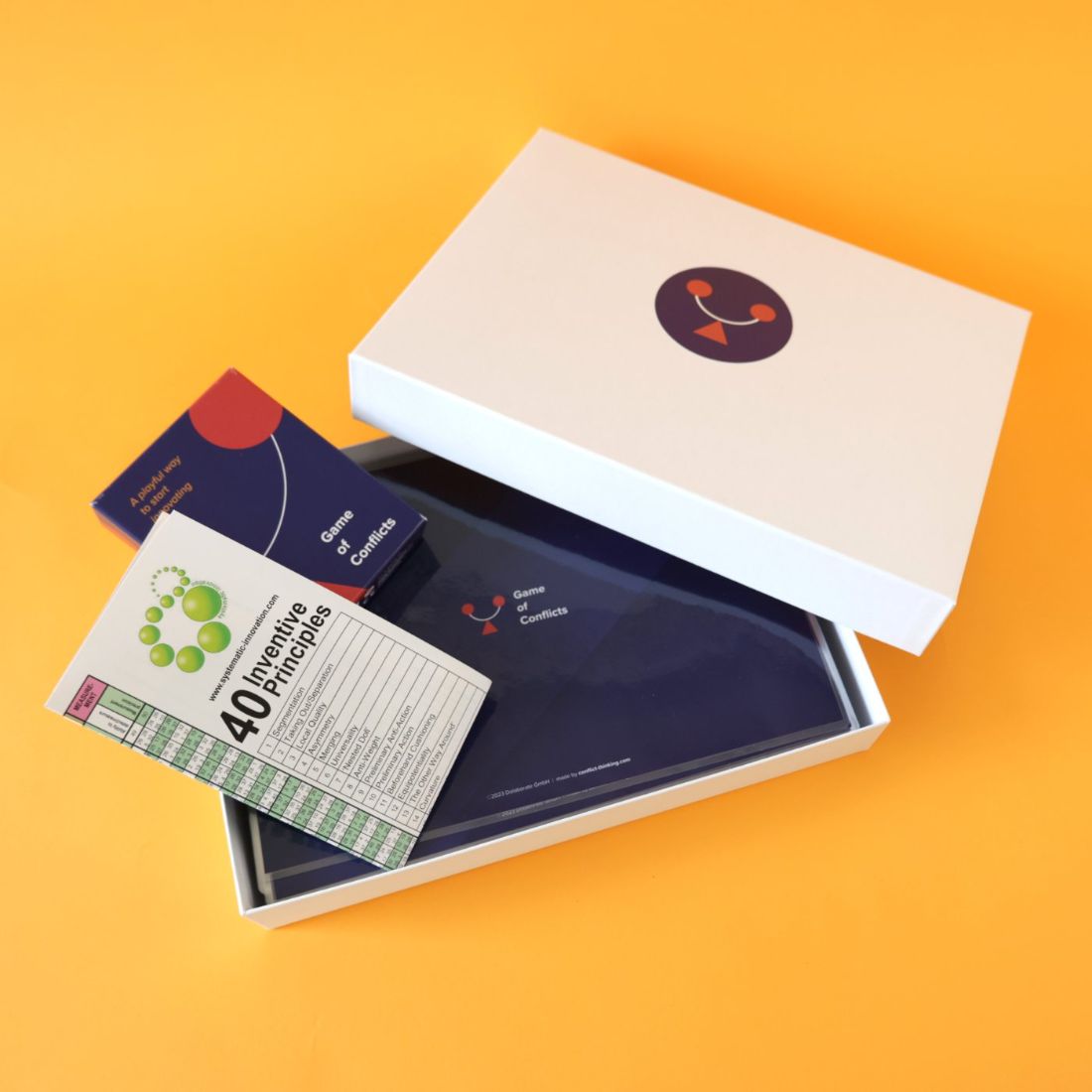
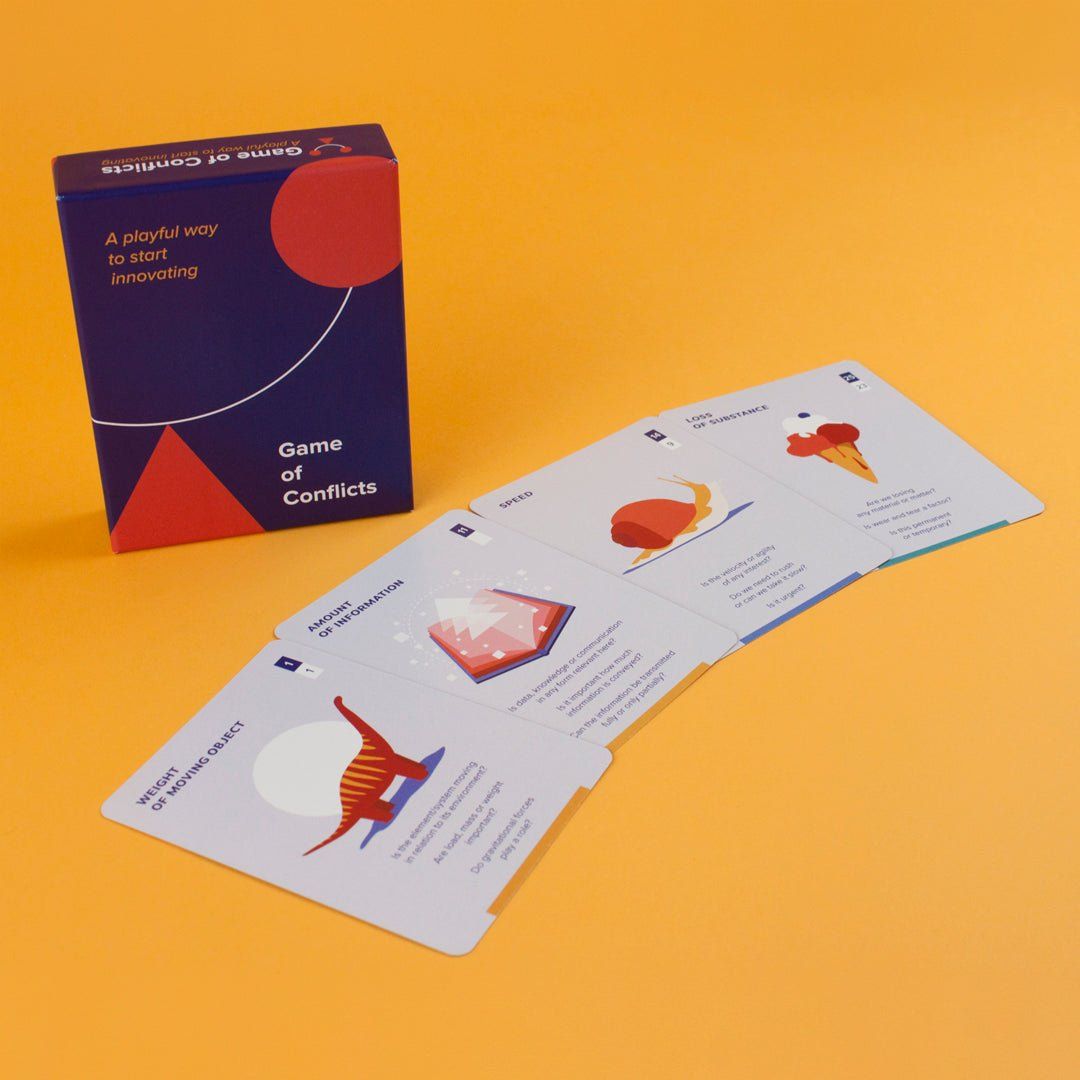
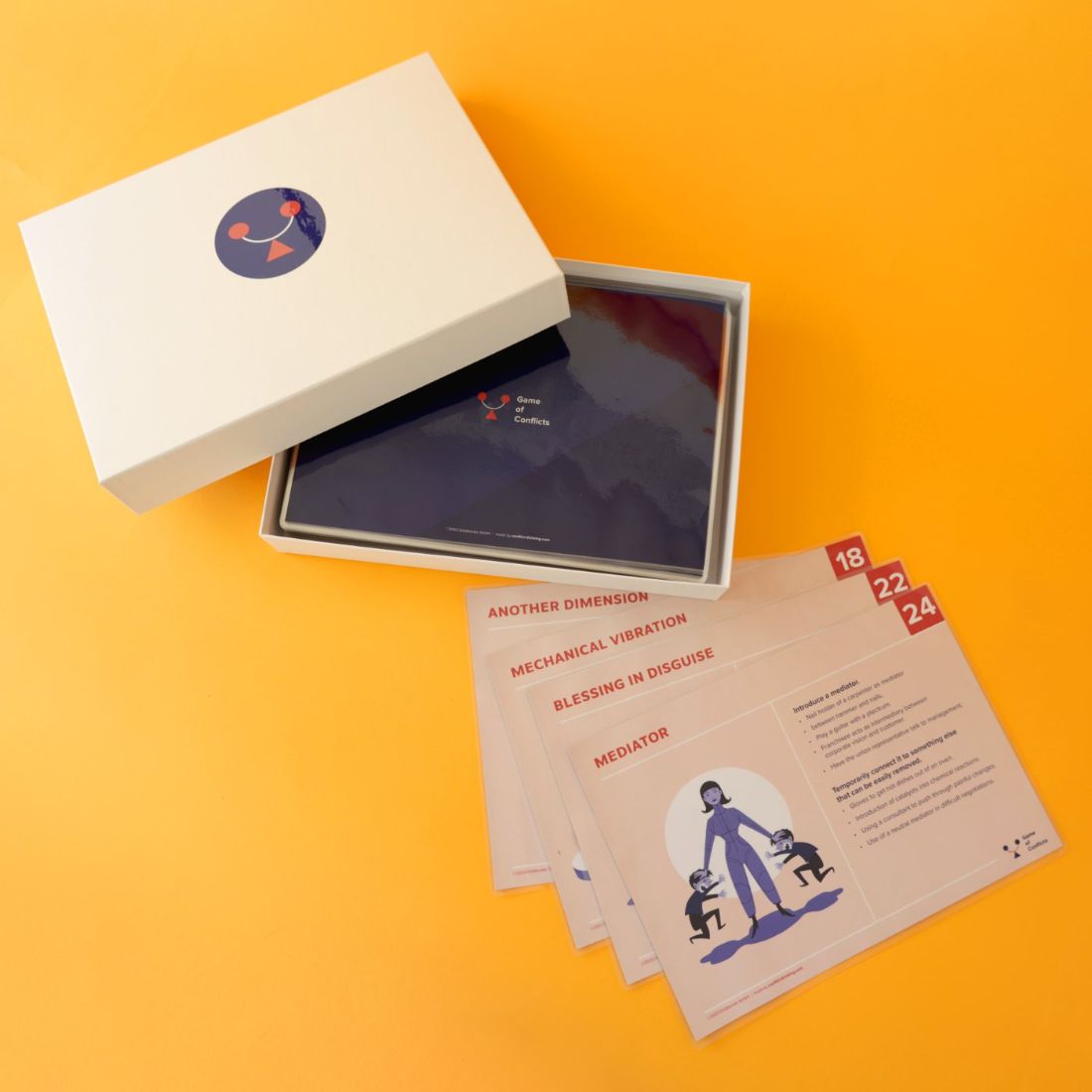
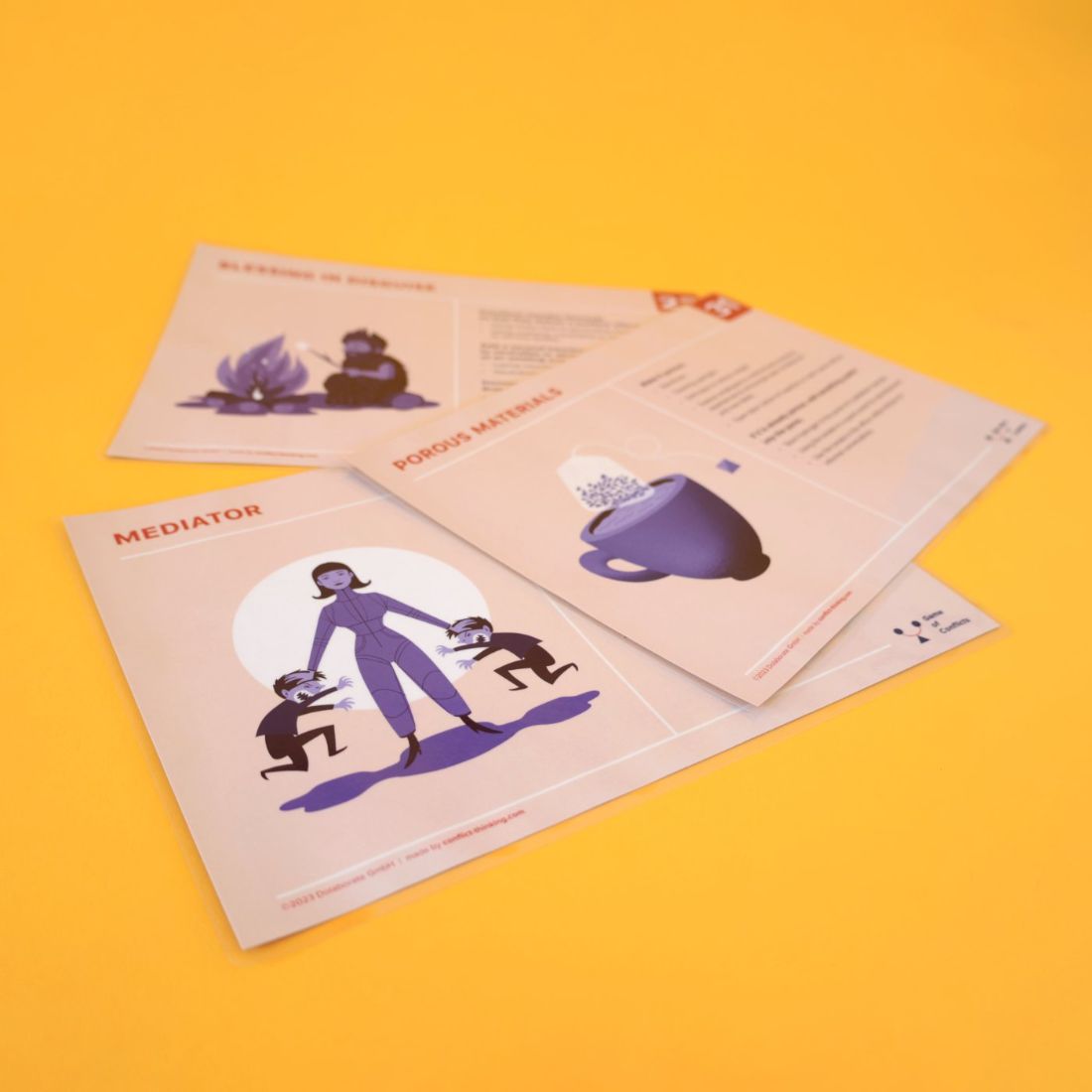
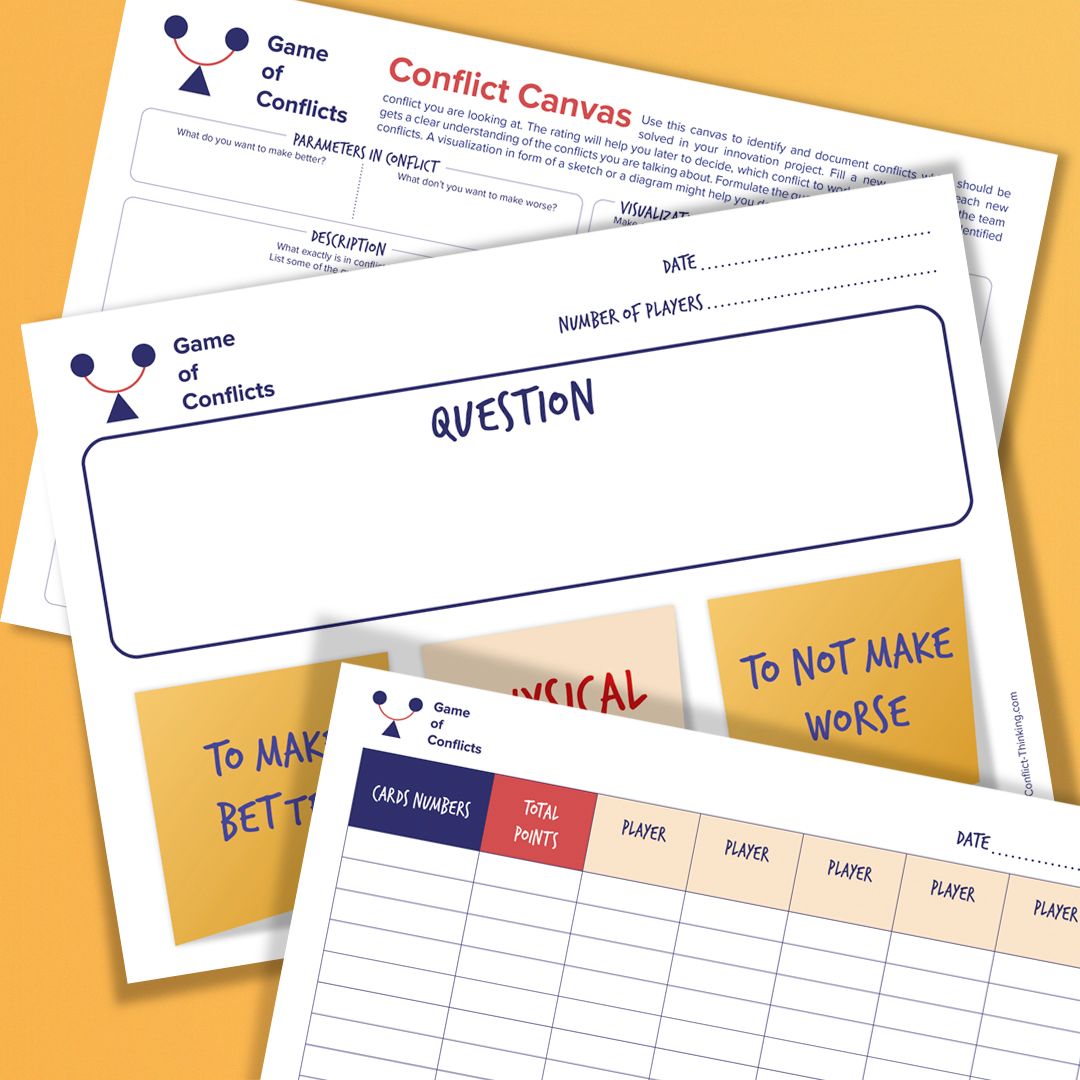


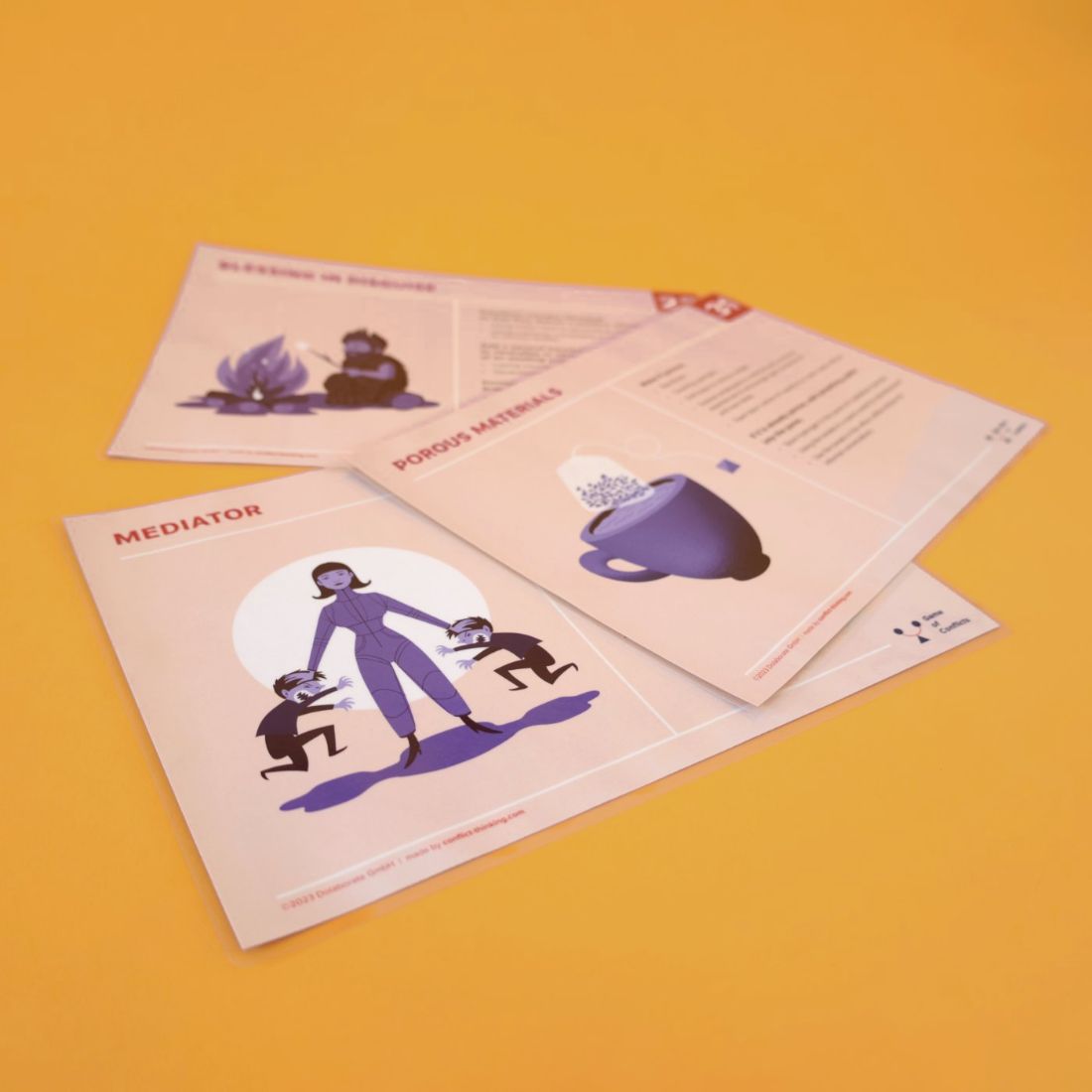
Game of Conflicts box and playing cards
Conflict Thinking presentsConflict Thinking präsentiert

Game of Conflicts

A playful way to start innovating

50 illustrated cards that help you and your team ask the right questions, turn your challenge into solvable conflicts and find innovative solutions – without plunging into the dry theory.50 illustrierte Karten, mit denen du und dein Team die richtigen Fragen stellen, eure Herausforderung in lösbare Konflikte verwandeln und innovative Lösungen finden könnt – ohne in die trockene Theorie einzutauchen.

ProductsProdukte

Choose a product, send us an email – that’s it. We’ll take care of the rest.Produkt auswählen, E-Mail senden, fertig. Um den Rest kümmern wir uns.

How ordering worksSo funktioniert die Bestellung

1
ChooseAuswählen

Open a product, pick the quantity and add it to your cart.Öffne ein Produkt, wähle die Menge und lege es in den Warenkorb.

2
SendSenden

In the cart, choose where to ship and click “Order by email”. Your email program opens with a prepared order – add your name and address and send it.Wähle im Warenkorb das Lieferland und klicke auf „Per E-Mail bestellen“. Dein E-Mail-Programm öffnet sich mit einer vorbereiteten Bestellung – Name und Adresse ergänzen, absenden.

3
ReceiveErhalten

We confirm your order by email with the invoice and shipping costs. You pay for your order and your package is on its way.Wir bestätigen deine Bestellung per E-Mail mit Rechnung und Versandkosten. Du bezahlst die Bestellung und dein Paket geht auf die Reise.

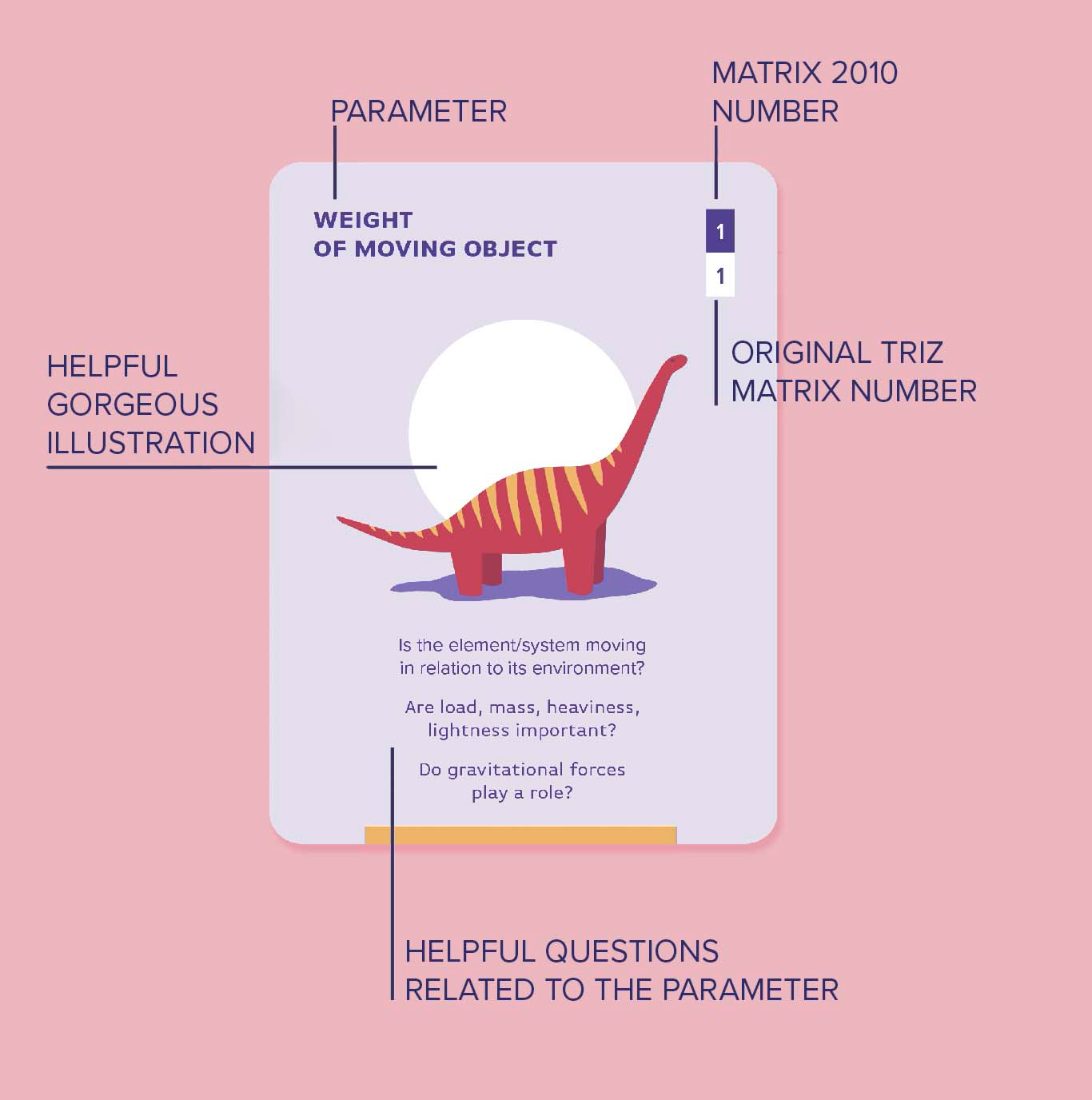
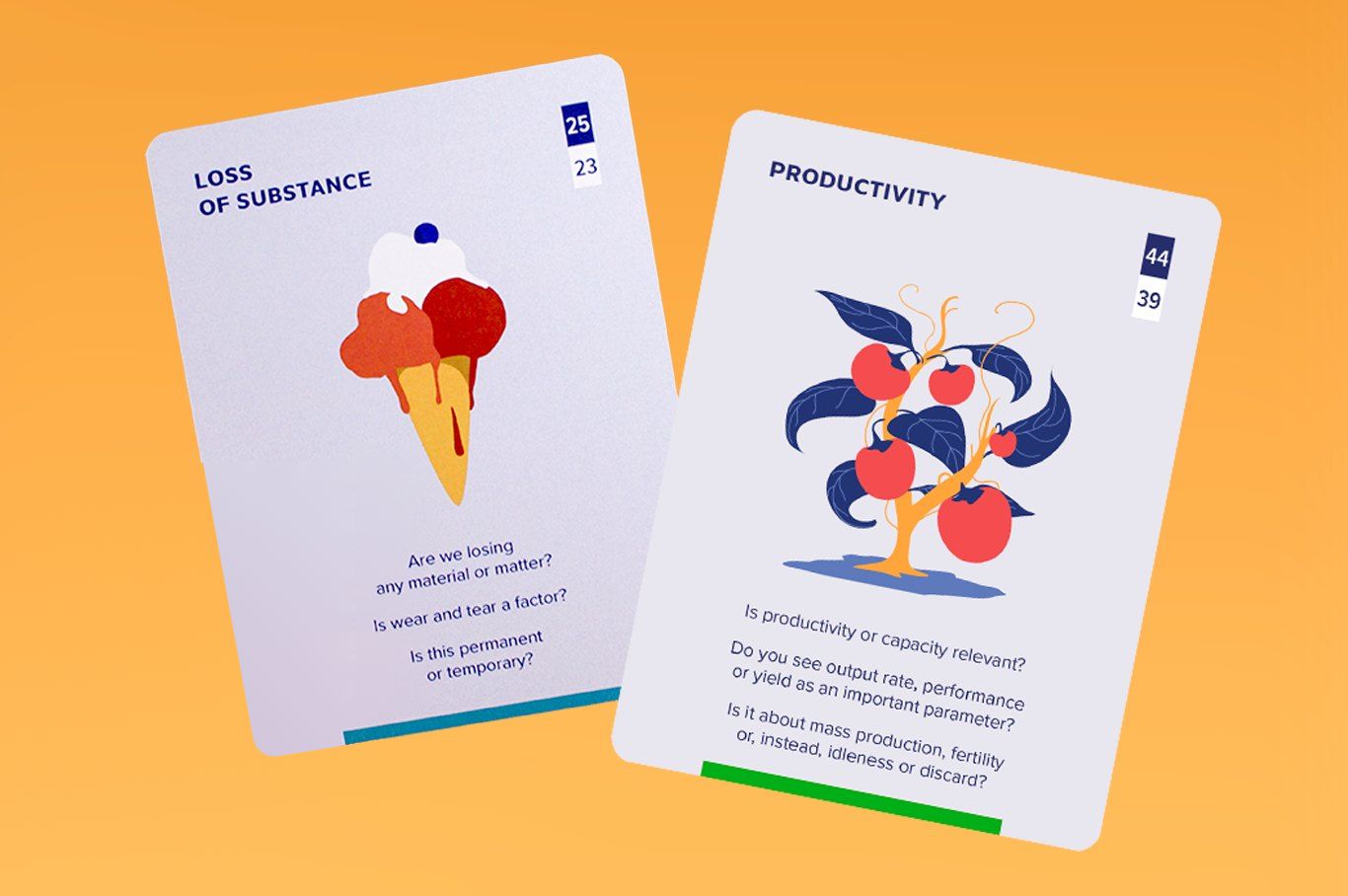
A Game of Conflicts card explained: parameter, Matrix 2010 numbers, illustration and helpful questionsThe cards “Loss of substance” and “Productivity”

How to playSo wird gespielt

Do you recognize the conflict?Erkennst du den Konflikt?

Game of Conflicts brings the conflict-oriented thinking of TRIZ into your workshop. You don’t need to know the theory, because the game guides you through the process.Game of Conflicts bringt das konfliktorientierte Denken von TRIZ in deinen Workshop. Du musst die Theorie nicht kennen, da das Spiel dich durch den Prozess führt.

Hand holding a red question mark
1
Describe your challengeHerausforderung beschreiben

Gather your team and summarise your challenge in one sentence. What needs to improve, and what must not get worse?Hol dein Team zusammen und fasse eure Herausforderung in einem Satz. Was soll besser werden und was soll sich nicht verschlechtern?

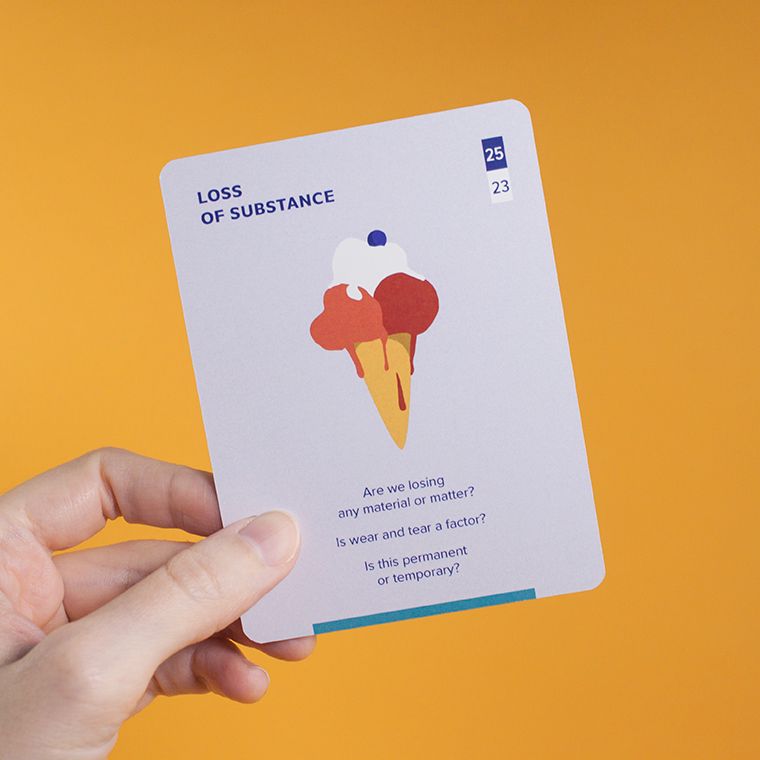
Hand holding the card “Loss of substance”
2
Select parametersParameter auswählen

Each card shows one system parameter, such as “loss of substance”, and three short questions that help you understand the parameter better. Players only keep the cards that are relevant to the current challenge.Jede Karte zeigt einen Systemparameter – etwa „Substanzverlust“ – und drei kurze Fragen, die den Parameter besser zu verstehen helfen. Jede:r Spieler:in behält nur die Karten, die für die zu bearbeitende Herausforderung wichtig sind.

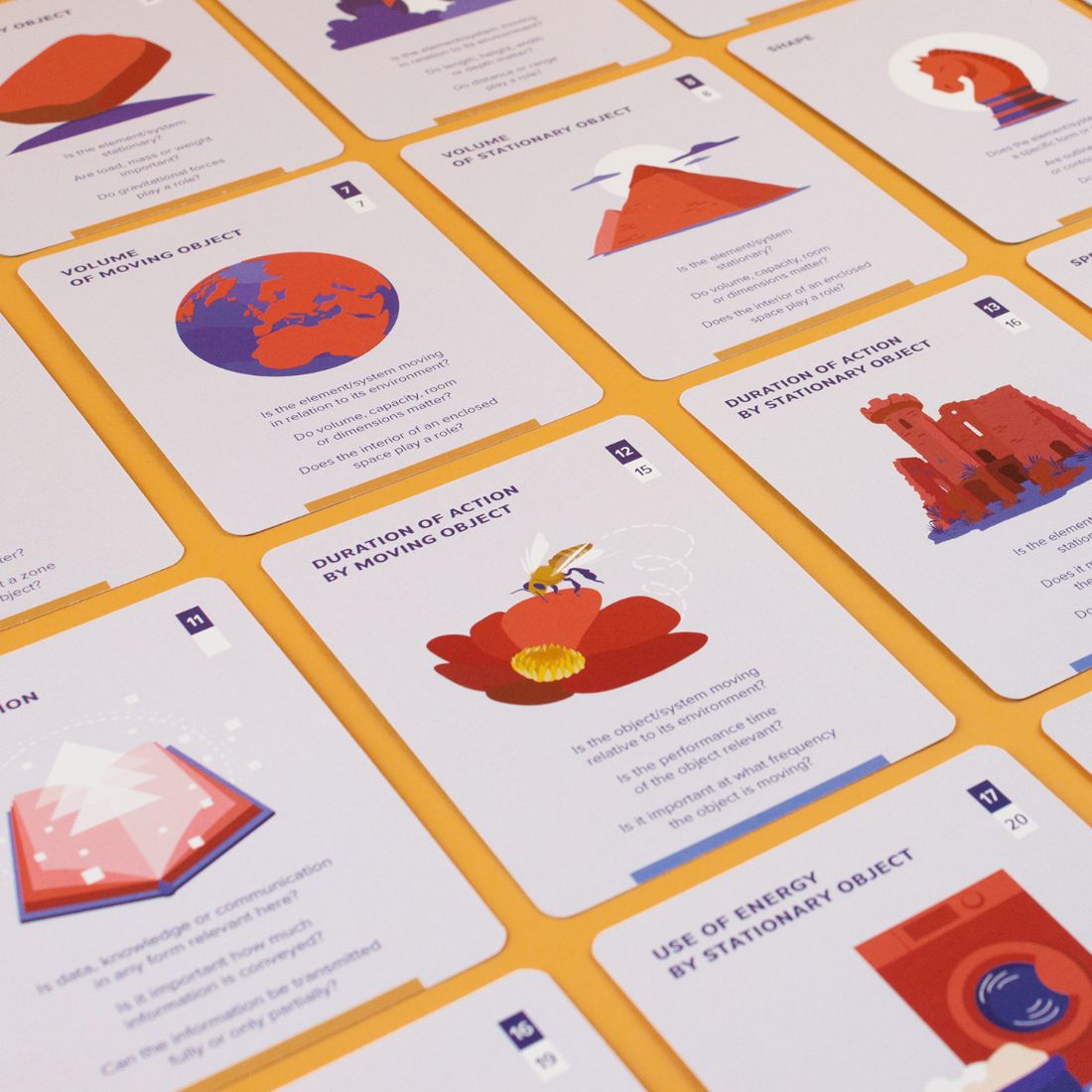
All 50 Game of Conflicts cards laid out on a table
3
Identify conflictsKonflikte identifizieren

Pair the cards. If improving one parameter makes another one worse, you have found a conflict. Make a note of it.Bildet Kartenpaare. Wenn die Verbesserung eines Parameters einen anderen verschlechtert, habt ihr einen Konflikt gefunden. Schreibt ihn auf.

Three players showing numbers with their fingers to prioritize conflicts
4
Prioritize conflictsKonflikte priorisieren

The players individually answer the question “How much do I want to work on this conflict?” Each player decides on a number from 1–5. Count to 3 and everyone shows as many fingers.Die Spieler:innen beantworten für sich die Frage: Wie sehr möchte ich an diesem Konflikt arbeiten? Jede:r Spieler:in wählt eine Zahl von 1–5. Das Team zählt bis 3 und jede:r zeigt mit den Fingern einer Hand die Wahl.

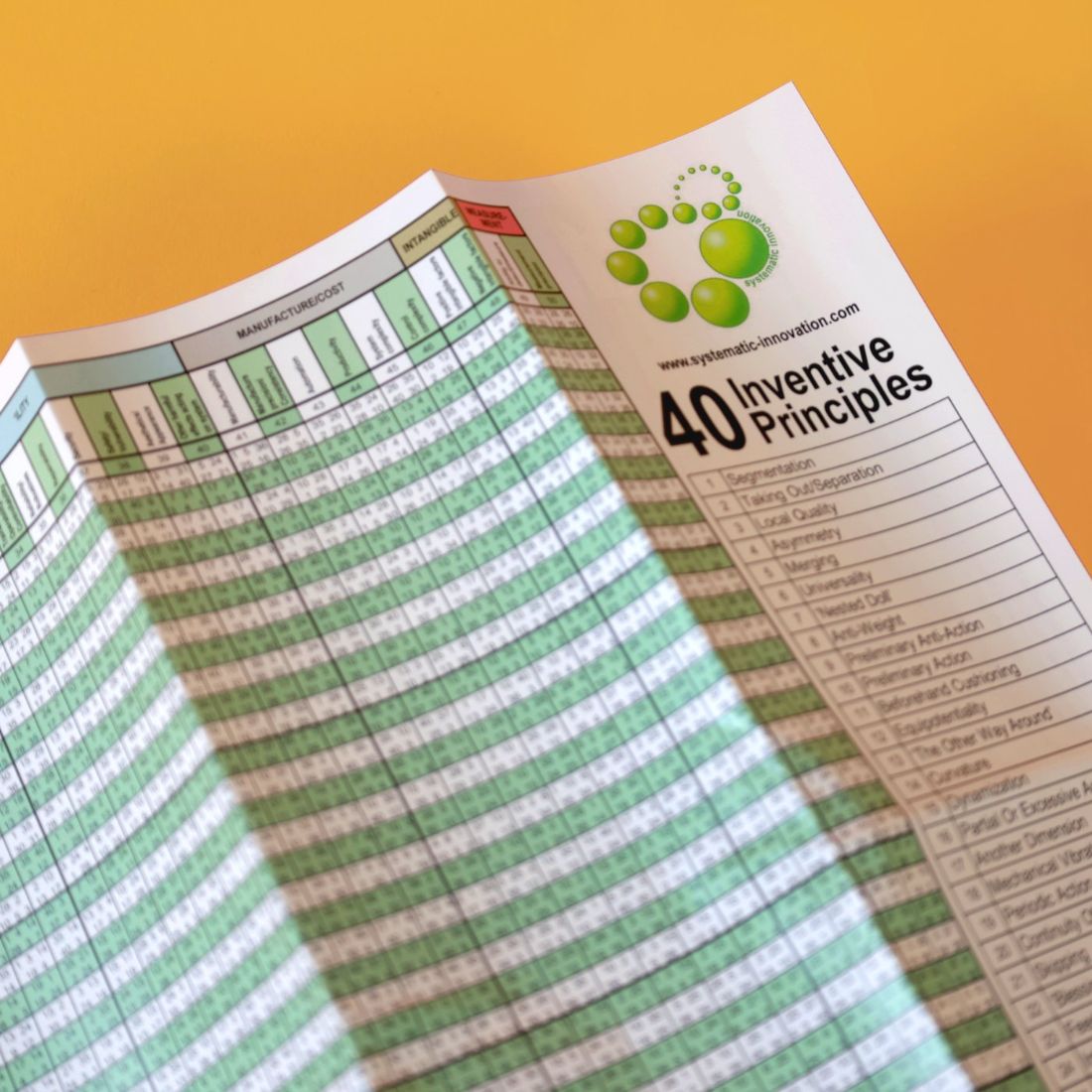
Matrix 2010 printout for finding solution principles
5
Identify principlesPrinzipien identifizieren

Use the Matrix 2010 to find the most promising of the 46 solution principles for each conflict.Findet mit der Matrix 2010 für jeden Konflikt die vielversprechendsten der 46 Lösungsprinzipien.

Solution principle cards used to find solutions
6
Find solutionsLösungen finden

Use the cards with the identified solution principles and develop ideas for how they can help you solve the problem.Nutzt die Karten mit den identifizierten Lösungsprinzipien und entwickelt Ideen, wie diese euch dabei helfen können, das Problem zu lösen.

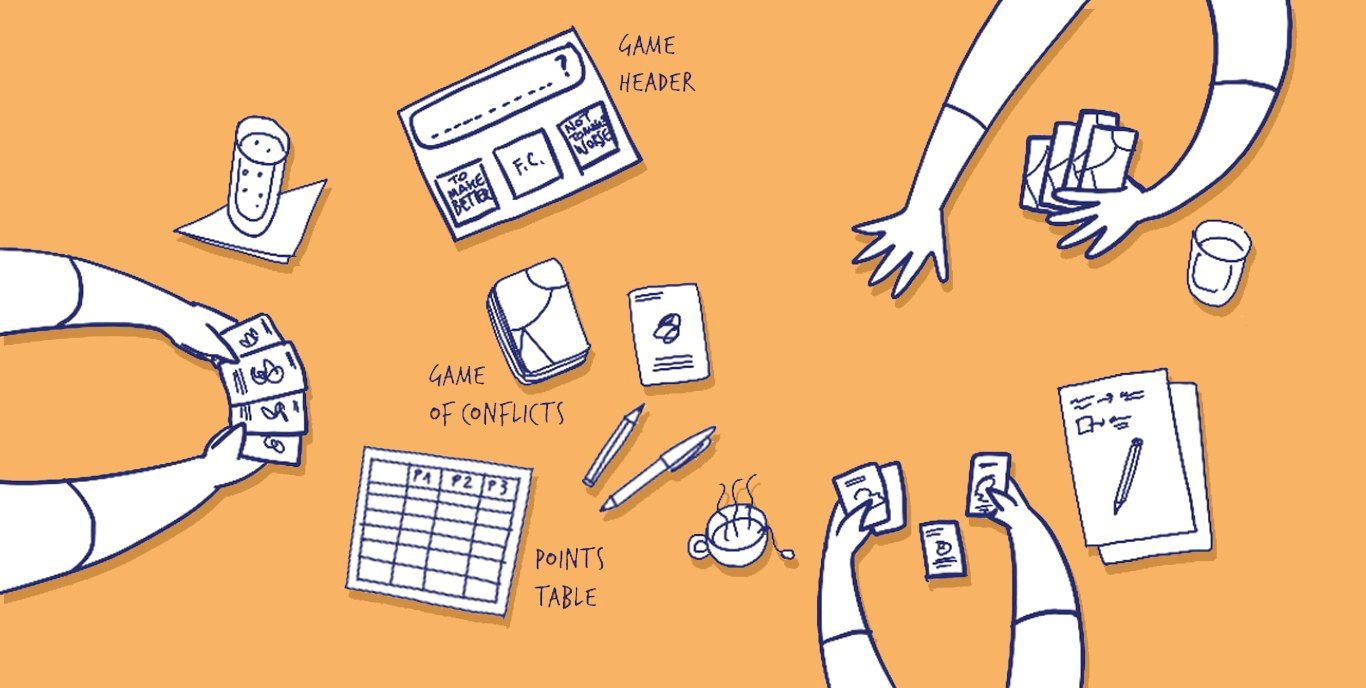
Illustration: a team playing Game of Conflicts with game header, cards and points table

Our storyÜber uns

The idea for Game of Conflicts was born in a meeting Moritz and Eckhard had in late 2019. The difference between intuitive-creative design thinking and the analytical-systematic TRIZ method fascinated both of us and led to the following question: “How might design thinkers benefit from TRIZ without plunging into the dry theory?”Die Idee zu Game of Conflicts entstand Ende 2019 bei einem Treffen von Moritz und Eckhard. Der Unterschied zwischen dem intuitiv-kreativen Design Thinking und der analytisch-systematischen TRIZ-Methode faszinierte uns beide und führte zu folgender Frage: „Wie können Design Thinker von TRIZ profitieren, ohne in die trockene Theorie einzutauchen?“

Do you recognize the conflict? Our solution: Let’s make it playful! This led to the idea of incorporating the conflict-oriented thinking of TRIZ into our Game of Conflicts. This game should not only enrich Design Thinking processes, but any kind of innovation workshop.Erkennst du den Konflikt? Unsere Lösung: Machen wir es spielerisch! So entstand die Idee, das konfliktorientierte Denken von TRIZ in unser Game of Conflicts zu bringen. Das Spiel soll nicht nur Design-Thinking-Prozesse bereichern, sondern jede Art von Innovationsworkshop.

We also quickly realized that our team was not complete, that we still needed help with both the design of the game and the communication about it. This is where Roberta comes in, in 2020.Schnell merkten wir, dass unser Team noch nicht komplett war – wir brauchten Unterstützung beim Design des Spiels und bei der Kommunikation. Hier kam 2020 Roberta ins Spiel.

With her complementary abilities, she makes our team complete. Together we developed and designed the game.Mit ihren ergänzenden Fähigkeiten macht sie unser Team komplett. Gemeinsam haben wir das Spiel entwickelt und gestaltet.

The game inspired us to think more about an approach that draws inspiration from identifying and playing with conflict. We call it Conflict Thinking. We strongly believe that Conflict Thinking can be a powerful enabler for innovation.Das Spiel hat uns dazu inspiriert, weiter über einen Ansatz nachzudenken, der Inspiration aus dem Erkennen von und Spielen mit Konflikten zieht. Wir nennen ihn Conflict Thinking. Wir sind fest davon überzeugt, dass Conflict Thinking ein starker Motor für Innovation sein kann.

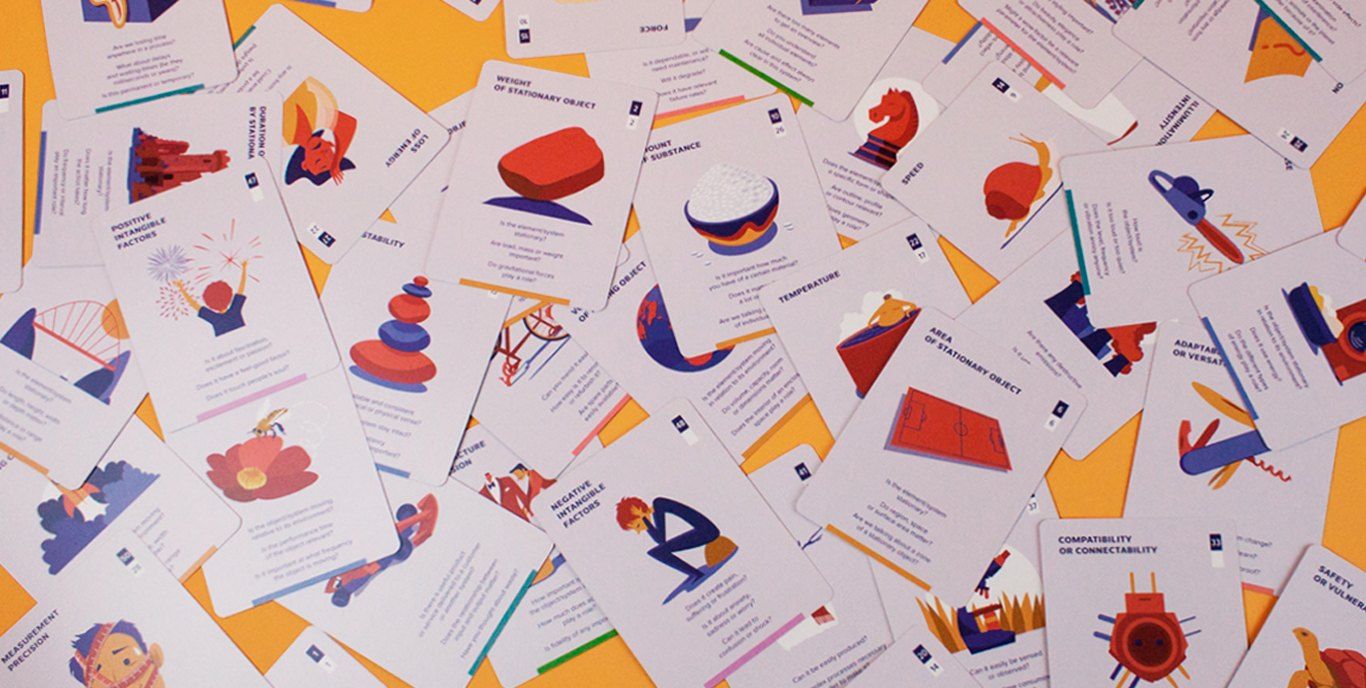
Illustration of Moritz, Eckhard and Roberta
Moritz, Eckhard & Roberta – the inventors of Game of ConflictsMoritz, Eckhard & Roberta – die Erfinder:innen von Game of Conflicts

FAQ

How do I order?Wie bestelle ich?

Add the products you want to your cart. In the cart, choose where your order should be shipped and click “Order by email”. Your email program opens with a prepared message to shop@conflict-thinking.com. Add your name and address, and send it. We reply with an order confirmation and the invoice.Lege die gewünschten Produkte in den Warenkorb. Wähle dort, wohin deine Bestellung geliefert werden soll, und klicke auf „Per E-Mail bestellen“. Dein E-Mail-Programm öffnet sich mit einer vorbereiteten Nachricht an shop@conflict-thinking.com. Ergänze Name und Adresse und sende sie ab. Wir antworten mit einer Bestellbestätigung und der Rechnung.

How do I pay?Wie bezahle ich?

Together with the order confirmation we send you an invoice with all payment details.Zusammen mit der Bestellbestätigung schicken wir dir eine Rechnung mit allen Zahlungsinformationen.

Do you ship outside Germany?Liefert ihr auch außerhalb Deutschlands?

Yes. Shipping costs 7 € within Germany, 15 € within the European Union, 22 € to other European countries and 25 € to the rest of the world. All parcels are tracked. Just tell us in your email where the order should go.Ja. Der Versand kostet innerhalb Deutschlands 7 €, innerhalb der Europäischen Union 15 €, ins übrige Europa 22 € und in den Rest der Welt 25 €. Alle Pakete werden mit Sendungsverfolgung verschickt. Schreib uns in deiner E-Mail einfach, wohin die Bestellung gehen soll.

Do I need to know TRIZ to play?Muss ich TRIZ kennen, um zu spielen?

No. The cards ask the questions, and the booklet explains how to play. If you already know TRIZ and prefer the classic Altschuller version, you can use the double numbering to play with the 39 classic system parameters or the 50 parameters by Darrell Mann.Nein. Die Karten stellen die Fragen, und das Anleitungsheft erklärt das Spiel. Wenn du TRIZ schon kennst und die Originalversion von Altschuller bevorzugst, kannst du dank der doppelten Nummerierung mit den 39 klassischen oder den 50 Systemparametern von Darrell Mann spielen.

Can my company order with a VAT ID?Kann mein Unternehmen mit USt-IdNr. bestellen?

Yes. Add your company name and VAT ID to the order email and we’ll put them on the invoice.Ja. Ergänze Firmenname und USt-IdNr. in der Bestell-E-Mail, dann stehen sie auf der Rechnung.

Can I return a product?Kann ich ein Produkt zurückgeben?

Yes, within 14 days after you receive it, as long as it is unused and in its original packaging. See our refund policy for details.Ja, innerhalb von 14 Tagen nach Erhalt, sofern es unbenutzt und originalverpackt ist. Details findest du in unseren Rückgabebedingungen.

Game of Conflicts playing cards spread out on the table

Let’s talkSprechen wir

Please contact us if you would like to learn more about conflict thinking, design thinking, TRIZ or design – or if you have a question about your order.Kontaktiere uns gern, wenn du mehr über Conflict Thinking, Design Thinking, TRIZ oder Design erfahren möchtest – oder eine Frage zu deiner Bestellung hast.

Write us an emailE-Mail schreiben
OrdersBestellungen
shop@conflict-thinking.com
General questionsAllgemeine Fragen
info@conflict-thinking.com